Kitchen Quote SVG: A Designer’s Real-World Review
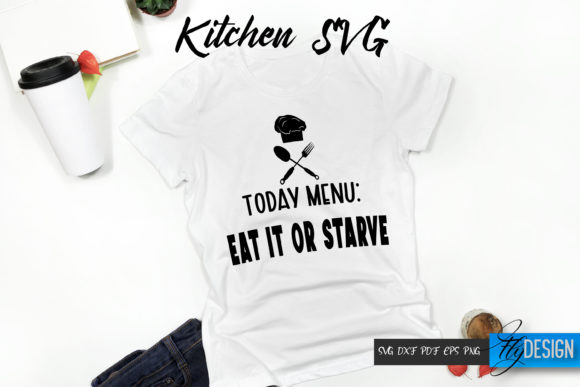
As a designer who spends half my life staring at stitch maps and the other half managing inventory for a small craft business, I have learned to look past the glossy preview images. We all know that what looks perfect on a white digital background does not always translate cleanly to fabric. When I first pulled up Kitchen Quote SVG. T Shirt Design V28, my immediate reaction was one of cautious optimism. It sits squarely in the category of Illustrations and Graphics, which usually implies a level of detail that can be tricky for embroidery machines. However, the potential for this asset extends far beyond simple screen printing.
The design carries a distinct mood—warm, inviting, and slightly rustic. It feels like the kind of visual personality that belongs in a home where meals are shared slowly. For those of us creating handmade products, this emotional resonance is half the battle. But as an experienced reviewer, I need to know if it holds up under the needle. I decided to test this concept mentally against a real-life scenario: a custom order for a boutique kitchenware shop looking for branded tote bag design options and matching aprons.
First Impressions and Visual Personality
The layout of Kitchen Quote SVG. T Shirt Design V28 suggests a balance between typography and illustrative elements. In the world of machine embroidery design, this combination is often where things go wrong. If the letters are too thin, they disappear into the fabric texture. If the graphics are too dense, the fabric puckers. My first observation was that the shapes appear bold enough to handle conversion from a vector graphic to an embroidery file. The lines do not seem overly intricate, which is a good sign for maintaining clarity after stitching.
This visual appeal is crucial for Etsy sellers and small shop product creators. Customers buying a personalized gift or a piece of custom apparel are looking for professionalism. A muddy, unclear design signals low quality. Conversely, a crisp, well-defined motif builds trust. This particular design seems to offer that clean aesthetic, making it suitable for everything from sweatshirt embroidery to decorative pillow covers.
Real-World Application and Versatility
Let’s talk about where this design actually shines. The product description notes its utility for cut vinyl and sublimation, but as an embroiderer, I see a different path. Imagine applying this to a heavy cotton canvas tote. The sturdy fabric provides the necessary support for the stitches, allowing the design to pop without distortion. It would also work beautifully as an embroidered patch that can be ironed onto denim jackets or chef coats, adding a layer of durability and style.
For holiday embroidery projects, such as Christmas tea towels or Thanksgiving table runners, the theme fits naturally. It is not overly seasonal, which means it has longevity. You can sell these items year-round, not just during peak holiday seasons. This versatility is key for maintaining steady income in a craft business. Whether you are creating baby embroidery items for a nursery or upscale commercial embroidery for a local café, the adaptable nature of this graphic allows it to bridge multiple niches.
However, we must address the elephant in the room: the source format. Since this is marketed primarily as an SVG for cutting and sublimation, using it for embroidery requires a crucial intermediate step. You cannot simply load an SVG into most embroidery software and expect magic. You must digitize it. This means converting those vector paths into stitch types like satin stitch for borders, fill stitch for larger areas, and running stitch for underlay or fine details. If you are not a digitizer yourself, you will need to hire one or use specialized software to create a proper digital embroidery file.
Navigating Technical Challenges
There are specific scenarios where you should use Kitchen Quote SVG. T Shirt Design V28 with caution. Small hoop sizes are the first concern. If you attempt to shrink this design to fit a 4x4 inch hoop on a baby onesie, you risk losing legibility. Tiny lettering and detailed corners can become a tangled mess if the stitch density is not adjusted correctly. Always check the scale before committing to the final stitch-out.
Fabric choice matters immensely. Textured fabrics like terry cloth or waffle weave can swallow up fine details. On these materials, you might need to simplify the design or increase the contrast of your thread colors. Similarly, stretchy fabrics require careful handling. Without the right stabilizer, the tension of the stitches can cause the garment to warp. For dark fabrics, ensure your digitizing includes a proper underlay to prevent the background color from showing through the top stitches.
Curved surfaces, such as caps or hats, present another challenge. The design needs to be distorted slightly in the digitizing phase to account for the curvature. If you skip this step, the final finished product will look warped. Always test on scrap fabric first. This is non-negotiable. Run a test on the same material you plan to use for the final item. Check for puckering, thread breaks, and overall clarity.
Enhancing Brand Value and Customer Trust
Why does this matter for your bottom line? Because presentation is everything. A well-executed embroidery project elevates the perceived value of the item. When a customer receives a personalized gift that looks professionally made, they are more likely to leave a positive review and return for future purchases. This design, when handled correctly, contributes to brand consistency. It looks intentional and polished, which helps in standing out in a crowded marketplace like Etsy.
Using high-quality design assets like this allows you to create cohesive collections. Imagine pairing this embroidered tote with matching printed postcards or mugs, leveraging the original SVG capabilities mentioned in the product description. This cross-platform consistency strengthens your brand identity. It shows customers that you pay attention to detail, whether in print or stitch.
Practical Notes for the Embroidery Designer
Before you rush to digitize and stitch, here is a checklist for practical success:
- Verify Licensing: The product description mentions use for cut vinyl and sublimation. It does not explicitly state embroidery rights. Confirm with the creator whether you can use this graphic for commercial embroidery projects. Never assume.
- Digitize with Care: Pay attention to stitch direction. Changing the angle of your fill stitches can add depth and reduce bulk.
- Test Contrast: Create black and white mockups to ensure the design is readable without color reliance.
- Check Hoop Size: Ensure the design fits comfortably within your machine’s maximum hoop area with room for stabilization.
- Select Proper Stabilizer: Use cut-away stabilizer for stretchy knits and tear-away for woven fabrics to ensure stability during stitching.
In conclusion, Kitchen Quote SVG. T Shirt Design V28 is a promising asset for the creative entrepreneur. It offers a warm, inviting aesthetic that translates well to various home and apparel applications. However, its success depends entirely on your technical execution. Treat it not just as a clipart file, but as a blueprint for a tactile experience. With careful digitizing, appropriate fabric selection, and rigorous testing, this design can become a staple in your embroidery project portfolio, driving engagement and sales for your small business.